
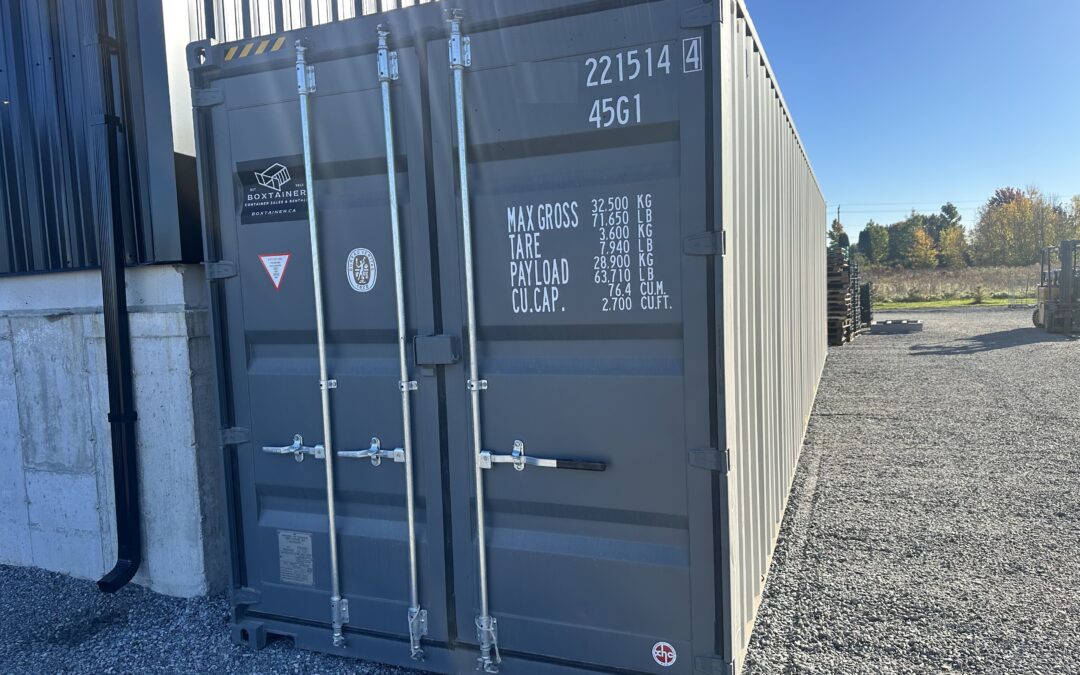
The Height Difference, Explained Simply
A standard 40ft shipping container runs about 8 feet 6 inches tall inside; a 40ft High Cube adds roughly one more foot, bringing internal height closer to 9 feet 6 inches. That extra foot doesn’t sound like much on paper. For anyone stacking pallets, storing tall equipment, or running shelving units, though, it can be the difference between two levels of storage and three. This gap tends to be noticed quickly, in a way, by Ontario businesses in retail, construction, and light manufacturing once product starts going inside.
Who Actually Needs the Extra Foot
Not everyone does, and that’s fine. A landscaping company storing tools and small equipment probably won’t miss the extra height at all. A distributor stacking pallets three high, though, usually will. From what we’ve seen, the decision tends to sort itself out once someone walks through what’s going into the unit and how it’s arranged. Bit by bit, most people land on an answer without much back and forth. Seasonal retailers storing bulky inventory during peak months often lean toward the High Cube, simply because vertical space can be used more efficiently there; which matters when floor space is limited.
Pricing Considerations in Ontario
Pricing between a standard 40ft and a 40ft High Cube tends to be close, though it varies depending on condition, whether the unit is New One Trip or Used Cargo Worthy, and current market rates. Ontario pricing generally reflects broader market averages rather than a fixed number. So it’s worth treating any quote as a starting point, not gospel. Rental rates follow a similar pattern; both are billed once per calendar month, with delivery and pickup charged as separate fees. A breakdown should be requested by anyone comparing options, rather than accepting a single bundled figure.
Rental vs Purchase: A Quick Reality Check
Buying makes sense for long-term, permanent storage needs. Renting tends to suit construction projects, renovations, seasonal inventory swings, or temporary business storage where the need has a clear end date. Boxtainer’s rental options cover both standard 40ft and 40ft High Cube units, so the height decision doesn’t need to be tied to whether someone buys or rents. A contractor in Niagara handling a six-month renovation project, for instance, might rent a High Cube purely for the added vertical room, without any ownership commitment at all. That’s usually where it clicks for most people comparing the two paths.
Site Preparation Matters More Than People Expect
Regardless of which size gets chosen, placement on a firm, level surface, asphalt, concrete, or compacted crushed stone, matters for both function and longevity. Container blocking is used separately from ventilation, and it’s meant for leveling, drainage, and keeping doors aligned properly over time. This gets overlooked more often than it should, honestly. That sounds good on paper, but a container placed on soft or uneven ground can develop door alignment issues fairly quickly, and that becomes a bigger hassle than the extra planning would have been.
Delivery Logistics for 40ft Units
More clearance than people usually expect is required when delivering a 40ft container, particularly via Landoll trailer: approximately 120 to 130 feet in a straight line, plus adequate room for turning and entrance access. This applies equally whether the unit is standard or High Cube, since the extra height doesn’t change the delivery footprint. Sites across Ontario vary widely in layout. So it’s worth confirming clearance ahead of time, rather than assuming it’ll work out on delivery day.
Boxtainer’s Niagara Presence and Ontario Reach
Boxtainer operates out of Niagara Falls, with a local yard that supports both container sales and container rental across the region. This isn’t treated as a limitation on inventory or logistics; instead, it’s a base that allows for faster turnaround on Ontario deliveries, particularly for customers closer to the Niagara area. Whether the need is a New One Trip 40ft High Cube for permanent storage or a Used Cargo Worthy standard unit for a short-term project, the condition terms, sizing, and delivery specifics can be walked through directly by Boxtainer’s team. For businesses and individuals across Ontario weighing a standard 40ft container against a High Cube, the clearest next step is speaking with someone who handles this daily. Probably enough said here. Visit Website to explore current container options and get a straight answer on what fits.
FAQ
Is a 40ft High Cube worth the extra cost over a standard 40ft container? For most storage needs involving pallets, shelving, or bulky items, the added height tends to justify the cost. If the contents are mostly flat or low-profile goods, a standard 40ft unit is often just as suitable. It really comes down to what’s being stored, and how it’s arranged inside.
Can I request a specific container to inspect before delivery? Hand-selection isn’t something that can be guaranteed by Boxtainer, since availability depends on depot and inventory location at the time of order. Containers are matched to condition and size specifications rather than a specific unit number. This limitation is standard across the industry, not something specific to Boxtainer.
What condition are Boxtainer’s containers sold in? Only New One Trip and Used Cargo Worthy (CW) containers are sold by Boxtainer. Cargo Worthy means the unit is structurally sound and suitable for cargo use, though normal cosmetic wear, such as dents, surface rust, or minor scratches, should be expected. Wind & Watertight and AS IS terms may apply to certain rental units depending on use case.
Do I need to worry about ventilation inside the container? Ventilation and moisture control are treated separately from how the container is leveled or elevated on site. Blocking is used for drainage, door alignment, and stability, not airflow. Anyone storing sensitive goods should ask about ventilation options directly, since it depends on the specific unit and use.