
Understanding Container Security Vulnerabilities
Security wasn’t designed as the primary concern for standard shipping container doors. A simple cam lever system is relied upon by the locking mechanism that can be defeated with basic tools. Standard padlocks are used by most containers that offer minimal protection against determined thieves.
Containers are often placed by Ontario businesses in remote areas or industrial zones where foot traffic is limited. Attractive targets are made by this isolation. Plus, valuable equipment or inventory that’s easy to resell is usually what the contents are.
Choosing the Right Lock System
Better security is provided by heavy-duty disc locks than traditional padlocks because the shackle is shielded from bolt cutters. Gripping with cutting tools is made harder by the rounded design. Similar protection is offered by shrouded padlocks by covering the shackle with a metal guard.
Hardened steel construction and weather-resistant coatings should be looked for in locks. Ontario’s temperature swings are handled better by stainless steel or brass mechanisms than basic steel. This was learned by a business owner in Hamilton after his locks were found seized up during a cold snap last winter.
Installing Lock Boxes for Added Protection
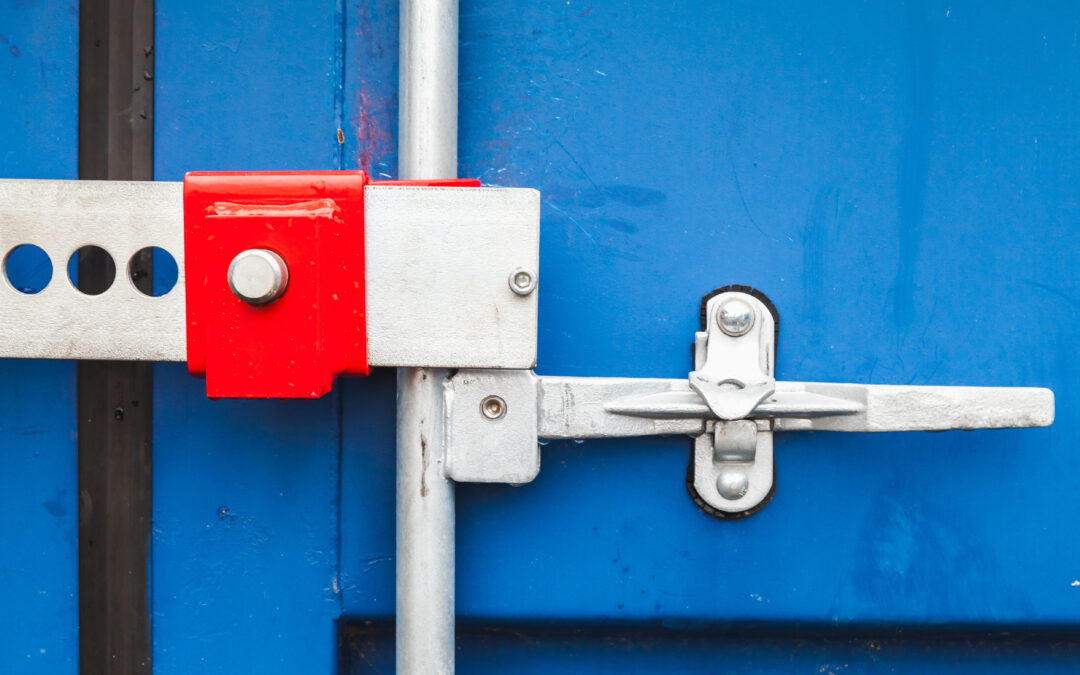
A secondary barrier around your primary lock is created by lock boxes. They’re welded or bolted to the container door; additional tools are required to breach them. Bolt cutters are carried by most thieves but not angle grinders or torches.
About an hour with basic welding equipment is taken by the installation process. The box should be positioned so both the lock and the door handle mechanism are covered. Internal brackets are included by some models that prevent the door from opening even if the primary lock fails.
Strategic Container Placement
As much as how you secure it, where your container is positioned matters. Theft attempts are discouraged by areas with natural surveillance from nearby buildings or regular foot traffic. Placing containers near fence lines should be avoided where thieves can work unobserved.
The approach routes to your container should be considered. Vehicle access is needed by thieves to remove large items quickly. Direct vehicle access can be blocked with barriers or strategic landscaping, which forces them to work on foot; their risk of detection is increased by this.
Lighting and Visibility Deterrents
Potential thieves are startled by motion-activated LED lights and attention is drawn to the area. Remote locations without electrical access are served well by solar-powered units. Their attempts are often abandoned immediately when the sudden illumination causes thieves to flee.
Containers are made more visible to passing security patrols or neighbors by reflective tape or bright paint. Their containers were painted bright orange by a manufacturing company near Toronto after multiple break-in attempts were experienced. The theft attempts stopped within weeks. Interesting how that works.
Alarm Systems and Monitoring
When the container is opened without authorization, battery-powered door alarms are triggered. Several hundred feet away is where they’re loud enough to be heard. Alerts are sent to your phone via cellular connection by some models.
Attempts to cut through container walls or doors are detected by vibration sensors. They’re more sensitive than door alarms but false alarms may be triggered during high winds. This issue is usually resolved by adjusting the sensitivity settings.
Regular Security Maintenance
Your locks and security equipment should be checked monthly for signs of tampering or weather damage. Moving parts should be lubricated with marine-grade grease to prevent corrosion. Batteries in electronic systems should be replaced before they fail completely.
Any suspicious activity around your containers should be documented, even if nothing was stolen. Patterns often emerge that help identify when locations are being scouted by thieves. Anyway, that’s usually where it clicks for most business owners.
Professional Security Solutions
Professional security monitoring services should be considered for high-value storage needs. Container-specific solutions that include cameras, alarms, and 24-hour response teams are offered by many Ontario companies. The monthly cost often pays for itself after just one theft incident is prevented.
Security options can be evaluated by Boxtainer when containers are being selected for your business needs. The unique challenges that are faced by Ontario businesses with container security are understood by our team. Customized solutions that fit your specific requirements can be discussed by visiting our website.
Mini-FAQ
Q: What type of lock works best for shipping containers? Look, disc locks and shrouded padlocks handle weather better than standard models. They’re built for outdoor exposure. Cutting tools that thieves commonly use are resisted by hardened steel construction.
Q: Can I use multiple locks on one container? Fair point to ask. Redundancy is created by multiple locks if one fails or gets compromised. Different tools are required to defeat different lock types. That still surprises people.
Q: Do security cameras actually prevent container theft? Funny enough, visible cameras work better than hidden ones for deterrence. Locations are scouted beforehand by most thieves, and monitored areas are avoided. Real or fake doesn’t matter much for prevention.
Q: What about GPS tracking for containers? Battery-powered GPS units help recover stolen containers after the fact. Location data is transmitted after they’re hidden inside. Recovery rates are improved significantly when tracking is used.