Start With What You’re Actually Storing
Before any size gets chosen, it helps to think clearly about what’s going in. Furniture, equipment, inventory, and documents are all packed differently. A contractor storing large machinery needs clearance and floor space; a retailer managing seasonal overflow needs shelving-friendly dimensions. In many cases, volume gets underestimated because the thinking is in terms of item count rather than actual cubic space. So before a size is settled on, walk through what you own and how it would realistically be arranged inside a container. That mental exercise tends to change the answer, sometimes pretty significantly.
The 10-Foot Container: Small but Useful
A 10-foot container is the smallest standard option, and it’s more practical than it looks on paper. Tight spots are handled well by this size, including driveways, side yards, and small commercial lots where a larger unit simply wouldn’t fit. These are often chosen by homeowners doing renovations, small trades businesses, or anyone who needs a secure on-site unit without a large footprint. The interior runs roughly 80 square feet of floor space. Not enormous, but enough for tools, records, or a focused set of materials; and because it’s compact, delivery tends to be simpler too.
The 20-Foot Container: The Most Common Choice
The 20-foot container is probably the most frequently rented and purchased size across Ontario, and for good reason. Capacity and practicality are balanced well at this size. Interior dimensions run approximately 19’4″ long by 7’8″ wide by 7’10” high, which is enough space for a full household move, a season’s worth of retail inventory, or a small construction site’s worth of materials. Shipping containers for sale in this size are widely available, and the delivery footprint is manageable for most residential and commercial properties. It’s the size most people land on after thinking it through carefully.
The 40-Foot Container: When You Need More Room
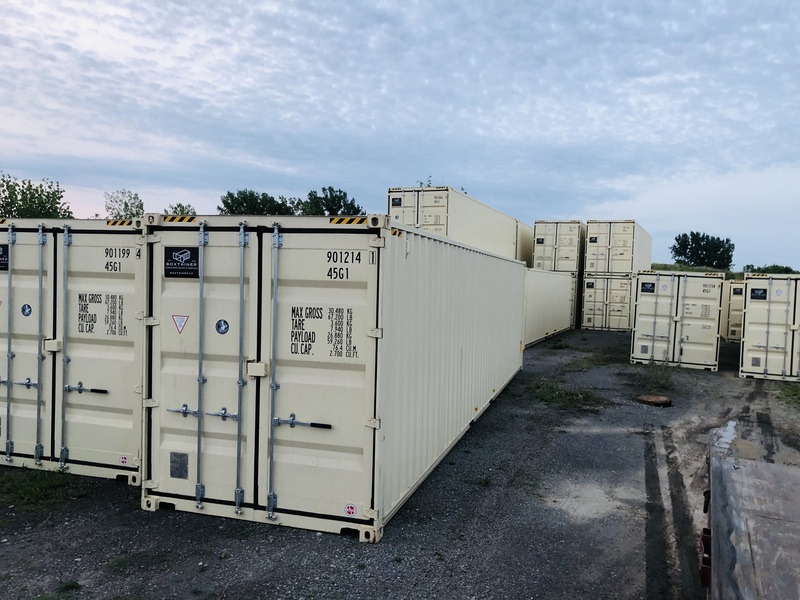
Businesses with higher volume storage needs often find that a 20-foot unit fills up faster than expected. A 40-foot container roughly doubles the floor space and is well-suited for larger inventories, agricultural equipment, or multi-department storage situations. Ontario businesses in manufacturing, construction, and distribution tend to gravitate toward this size over time. One thing worth noting: the delivery requirements are more involved. A longer truck is needed, and the drop-off site needs to be accessible and level; so that’s worth confirming before a delivery date gets set.
High-Cube Containers: The Overlooked Option
Standard containers have an interior height of about 7’10”. High-cube containers add roughly a foot to that, bringing interior height to around 9’6″. It doesn’t sound like much, but things change considerably when pallets are being stacked, tall equipment is being stored, or shelving systems are being set up. High-cube units are available in both 20-foot and 40-foot lengths. From what we’ve seen, this option is often overlooked until someone tries to fit something tall into a standard unit and realizes the clearance isn’t there. Worth asking about upfront, I suppose.
Site Conditions Matter More Than People Think
Choosing a container size isn’t only about what goes inside; it’s also about where the unit is going. A 40-foot container needs a delivery truck with significant turning room. Soft ground, narrow laneways, and overhead obstacles can all create complications, and in Ontario, seasonal ground conditions add another layer. A site that’s fine in summer might be soft or icy in winter. These factors are considered during the delivery planning process at BOXTAINER, but it helps when site conditions are thought through in advance by customers. That’s usually where it clicks that size and site go together.
Renting vs. Buying: How Size Plays Into the Decision
Container size and the rent-versus-buy question are more connected than they might seem. Shipping containers for rent in smaller sizes are often available on shorter timelines and with more flexible terms, which suits temporary projects well. Larger units, like 40-foot containers for sale, tend to make more sense as a longer-term investment for businesses with ongoing storage demands. In Niagara storage situations or across other parts of Ontario, availability can vary by size and season, so it’s worth checking what’s in stock and what lead times look like before a plan gets locked in. To be fair, that last part catches people off guard more often than you’d expect.
How BOXTAINER Can Help You Decide
Getting the size right the first time saves money, reduces hassle, and means the storage solution actually works from day one. Ontario businesses and individuals are matched with the right container size by BOXTAINER’s team, with real factors considered: what’s being stored, where the unit is going, and whether buying or renting makes more sense for the situation. Practical experience is brought to every conversation, and the goal is always a solution that fits, not just one that’s available. If you’re working through the decision, visit the BOXTAINER website to explore your options and get the right guidance from the start.
FAQ
Q: What’s the actual difference between a 20-foot and 40-foot container?
The size difference is straightforward, but the use case difference is where it gets interesting. A 20-foot container is easier to place on tighter properties and costs less to rent or buy. A 40-foot unit roughly doubles the storage capacity available, which is useful for larger inventories or equipment. Both are commonly found as containers for rent or containers for sale across Ontario. Worth knowing which one your site can actually fit before you commit.
Q – Can I use a 10-foot container for a small business?
Fair point to ask. A 10-foot container is well-suited for storing tools, seasonal supplies, or overflow stock when space is limited. It’s been used by contractors, small retailers, and property managers who just need a secure, accessible unit on-site. Not a lot of room, but enough for the right situation.
Q: Does container size affect delivery?
Look, it does, more than people usually factor in. Longer containers need more turning radius and a flat, accessible drop-off area. A 40-foot unit being delivered to a tight urban property or a rural site with a soft driveway can create real complications. This is something that gets worked through with customers by BOXTAINER’s team before delivery is scheduled. That still surprises people.
Q – Is renting or buying a container better for short-term storage needs?
Depends on how long “short-term” actually is. Shipping containers for rent tend to make more sense for seasonal projects, construction timelines, or temporary Niagara storage situations where a long-term commitment isn’t wanted. Buying makes more sense when the need is ongoing. Both options are available, and the right one usually becomes obvious once a timeline gets mapped out.