What the Three Sizes Actually Give You
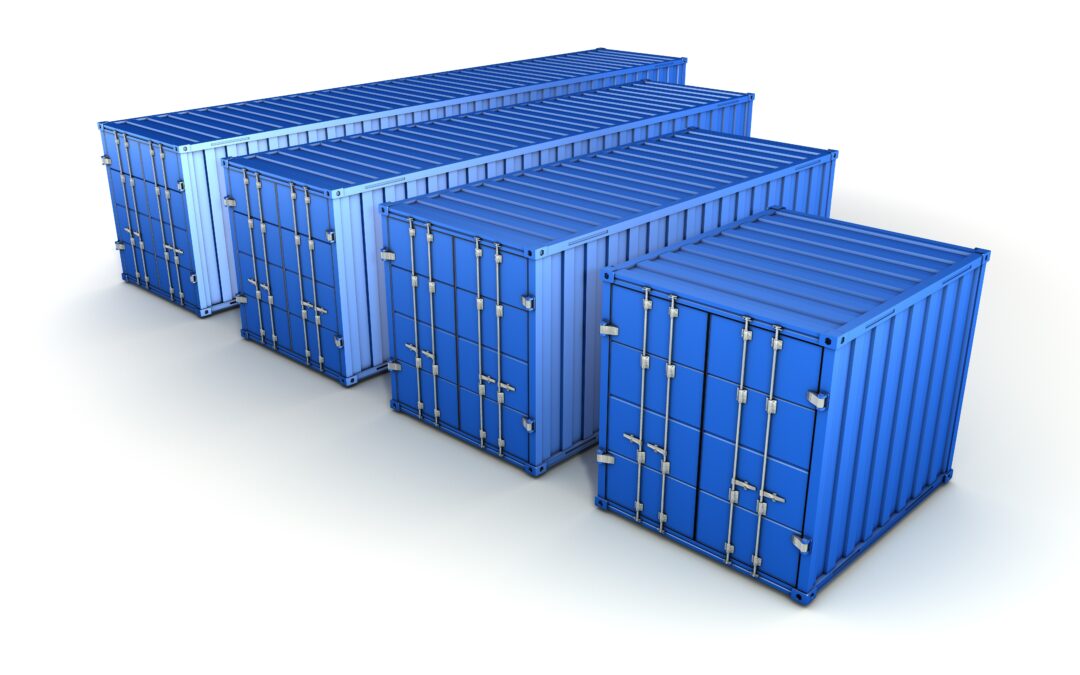
The basics are worth starting with. A 10ft container measures roughly 10 feet long, 8 feet wide, and 8.5 feet tall, which gives around 80 square feet of usable floor space. A 20ft doubles that to approximately 160 square feet. A 40ft brings you to around 320 square feet, which is comparable to a small apartment in terms of raw floor area.
These aren’t abstract numbers. In practice, a 10ft unit holds roughly what a small storage locker can carry. A 20ft handles a one-bedroom home’s contents, or a season’s worth of contractor equipment. A 40ft is closer to a two-car garage, sometimes more.
Once it’s framed that way, the size you need is usually obvious.
The 10ft Container: Small Footprint, Specific Purpose
A 10ft container tends to get underestimated, and that’s not really fair. It’s sometimes seen as the “not quite enough” option, but for tight urban lots, narrow driveways, or properties where space is genuinely limited, a 10ft unit is often the only practical choice available.
Small retailers in Ontario have used them for seasonal overflow. Homeowners going through a renovation have kept one in the side yard for a few weeks without it becoming a neighborhood issue. Tools and materials have been staged by contractors on smaller job sites where a 20ft simply wouldn’t fit.
Not a scaled-down compromise. A purpose-built size for specific situations. And in many cases, it’s the one that gets overlooked first and appreciated most after delivery.
The 20ft Container: The Default for Good Reason
If someone asks which container size is most commonly rented across Ontario, the answer is almost always the 20ft. That makes sense. A useful middle ground is hit between capacity and manageability, and that balance is hard to argue with.
A 20ft container can hold the contents of a small home, a few months of business inventory, or a full season of landscaping and construction equipment. Most residential driveways and standard commercial lots can accommodate one without requiring special site prep. Delivery is generally straightforward, provided there’s enough linear clearance.
From what we’ve seen, most customers who start by considering a 10ft end up moving to a 20ft once they actually think through what’s being stored. The extra space tends to get used, not always, but often enough that it’s worth factoring in.
The 40ft Container: When Volume Is the Priority
A 40ft container represents a different category of decision. It’s not just “more space.” More site space is required, more clearance is needed for delivery, and in some cases, a firmer, more level surface has to be in place before anything gets dropped.
That said, for the right use case, nothing else comes close. Agricultural operations storing equipment between seasons, manufacturers keeping raw materials on-site, and event companies managing large inventories have all found 40ft containers to be the most practical option available. Over time, that pattern holds up pretty consistently.
The delivery logistics are worth planning carefully. Roughly 50 to 60 feet of clear, level access is needed, and overhead obstructions like power lines or tree branches can complicate things. These details are usually sorted out during the site assessment, but it’s better to think through them early.
How Site Conditions Shape the Decision
This is the part that catches people off guard. Container size isn’t just about what’s being stored; it’s also about where the container is going.
A property with a long, flat driveway and no overhead clearance issues can accommodate most sizes without much planning. But a lot with a steep grade, a narrow entrance, or mature trees along the access path may limit options before cost or capacity even enters the picture. That sounds straightforward on paper, but in practice, it catches more people than expected.
In Ontario, seasonal ground conditions matter too. Soft ground in spring, frozen ground in winter, and gravel lots that shift over time can all affect how a container sits and whether it stays level. These aren’t dealbreakers, but they’re real factors. Anyway, that’s usually where it clicks that size selection and site planning go together.
Renting vs. Buying Across All Three Sizes
Containers for sale and containers for rent are both available in 10ft, 20ft, and 40ft sizes, and the right choice between buying and renting depends mostly on how long the container is needed.
For short-term projects, renovation storage, or temporary business overflow, renting is almost always the more practical path. The cost is predictable, delivery and pickup are included, and no long-term commitment is required. To be fair, that flexibility alone is worth something for a lot of customers.
Buying makes more sense when a container is going to stay on a property for an extended period, or when it’s being modified for a specific purpose. A container being converted into a site office or a custom storage unit is generally worth purchasing outright. The break-even point is usually somewhere between 12 and 18 months of equivalent rental cost, depending on the size.
Common Use Cases by Container Size
Seeing how different customers have matched size to need is useful. A few patterns come up regularly.
10ft containers tend to be used for residential renovation overflow, small retail seasonal storage, and on-site tool storage for smaller trades. 20ft units are popular with contractors, small manufacturers, and homeowners doing larger moves or extended renovations. 40ft containers are more common in agricultural settings, larger commercial operations, and situations where dedicated on-site inventory space is needed without building a permanent structure.
Niagara storage customers, for example, often deal with properties that have more outdoor space but stricter access constraints than urban Ontario lots. The size that works in one context doesn’t always translate directly to another; that’s worth keeping in mind when options are being compared.
Choosing the Right Size with BOXTAINER
Getting the size right the first time saves time, money, and the hassle of a swap. BOXTAINER works with Ontario-based businesses and individuals to match container size to actual need, with what’s being stored, how long it’s needed, and what the site can realistically accommodate all factored in from the start.
Whether shipping containers for sale or shipping containers for rent are being considered, the process starts with a straightforward conversation about your situation. No overselling, no guesswork. Just a clear recommendation based on what actually fits.
To explore available sizes and get a quote, visit BOXTAINER’s website directly.
Mini-FAQ
Q: Is a 10ft container actually worth it, or should I just go with a 20ft?
Fair point. A 10ft container is genuinely useful when site space is limited or the storage need is modest, like seasonal equipment, a few pallets, or overflow from a small retail location. It’s not a compromise. In many cases, it’s simply the right tool. That said, if you’re unsure, a 20ft is usually the safer default.
Q – Can a 20ft container fit in a standard residential driveway?
Look, it depends on the driveway. A 20ft container is about 20 feet long and 8 feet wide, so a standard two-car driveway can often accommodate one, provided there’s enough depth. Overhead clearance from trees or power lines is also checked during delivery. Not always a simple yes or no.
Q: What kinds of businesses typically use 40ft containers?
Contractors, manufacturers, and agricultural operations tend to reach for 40ft units most often. They’re also used by event companies storing equipment between seasons, and by Ontario businesses that need on-site inventory space without committing to a permanent structure. A lot of ground can be covered with one of these. That still surprises people.
Q: Are containers for sale a better deal than renting long-term?
Funny enough, the math shifts around the 12 to 18-month mark for most customers. Short-term needs almost always favor renting. But if a container is going to sit on a property for a year or more, buying often works out to a lower total cost. Depends on how long “long-term” actually means for your situation.