
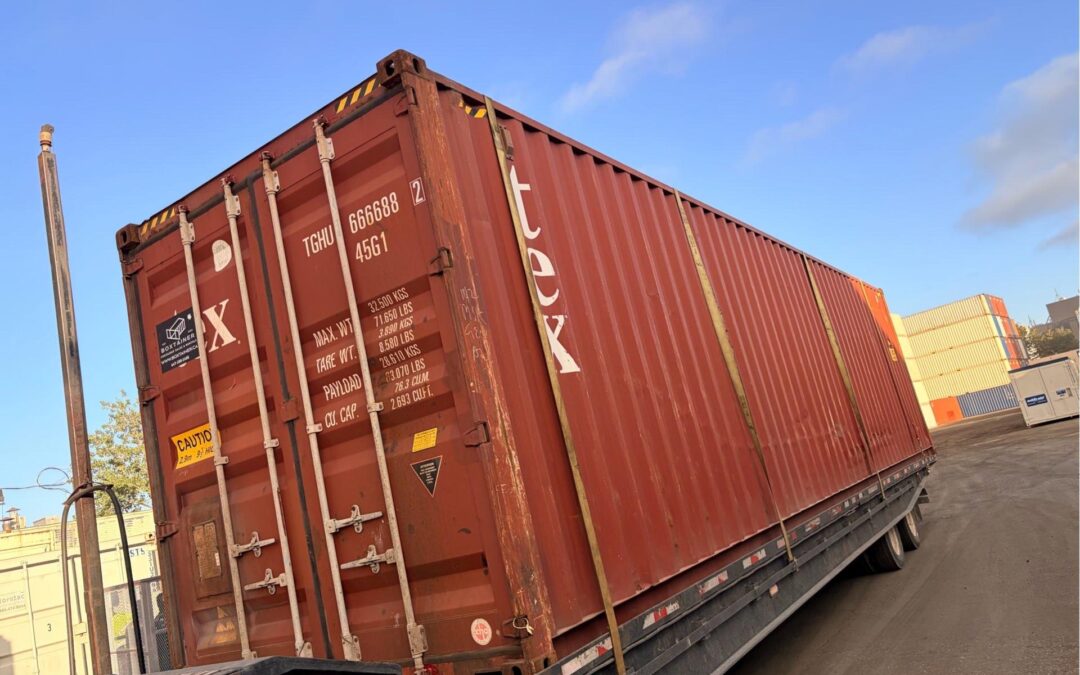
Understanding What “AS IS” Really Covers
AS IS is, in many cases, one of the more misunderstood terms in the container market. It simply means the unit is sold in its present condition; no added guarantees are made beyond what’s disclosed at time of sale. For a business in Niagara needing a container to hold seasonal equipment, this can work fine. The unit doesn’t need to look sharp. It just needs to keep things dry, and secure. AS IS is treated by Boxtainer as a distinct category, separate from Cargo Worthy, and the difference is explained upfront so there’s no confusion at delivery.
Cargo Worthy: The Structural Baseline
Cargo Worthy (CW) means a container has been inspected and found structurally sound, suitable for cargo movement. It’s not a cosmetic rating. A CW unit can still have dents, surface rust, scratches, or visible repairs; that’s considered normal wear for a container that’s spent years in circulation. What matters, underneath all of it, is the structural integrity. CW units are sold by Boxtainer alongside New One Trip stock, and for many Ontario buyers, CW hits a reasonable middle ground between price and reliability.
When AS IS Fits the Job
AS IS tends to make sense in a few recurring situations. A contractor storing tools on a fixed site, a farm needing extra dry storage that won’t be relocated, or a business testing out container storage before committing to something newer, these are common cases. In most of these situations, the container stays put after delivery, so cosmetic condition and minor imperfections matter less. Some variation between units should be expected, since AS IS depends heavily on whatever is currently sitting at the depot.
When It’s Worth Paying More
There are situations where AS IS probably isn’t the right move. If a container will be relocated multiple times, exposed to heavy use, or needs to hold cargo for transport, Cargo Worthy or New One Trip make more sense. A known baseline, with no prior use history, is what a 40′ High Cube in New One Trip condition gives a buyer. It costs more; for businesses relying on the unit long-term, though, that certainty can be worth it. Probably enough said on that point.
Site Preparation Still Matters, Regardless of Condition
Condition grade doesn’t change what’s needed on the ground. Every container, whether AS IS or New One Trip, needs to sit on a firm, level surface such as asphalt, concrete, or compacted crushed stone. Door misalignment over time is often caused by uneven ground, and moisture can get trapped underneath as a result. Container blocking, separate from ventilation, is used to level the unit and support proper drainage. This part of the process is often overlooked until it becomes a problem, sometimes months later.
Delivery Logistics in Ontario
Space is one of the most common surprises for first-time buyers. Roughly 70 to 80 feet of straight clearance is generally needed for a 20′ container delivery, while a 40′ Landoll delivery needs closer to 120 to 130 feet, plus enough room to manoeuvre and turn. This applies whether the site is in downtown Toronto or a rural property outside Niagara Falls. Site access is reviewed by Boxtainer ahead of delivery day, since a tight driveway can turn a routine drop-off into a longer job. Sometimes, a longer job than anyone planned for.
Renting as an Alternative Worth Considering
Not every situation calls for a purchase. Renting fits well for construction projects, seasonal inventory, renovations, or temporary business storage where the need has a clear end date. Rentals are billed by Boxtainer once per calendar month, not every 28 days, and delivery and pickup are charged separately from the monthly rate. Over time, this structure tends to be more predictable for budgeting, particularly on projects with shifting timelines.
Making the Right Call for Your Situation
Ontario container pricing varies by size, condition, and how far a unit needs to travel; broad market ranges give a rough sense of cost but shouldn’t be treated as a fixed quote. Both sale and rental inquiries across the region are supported by Boxtainer’s Niagara Falls yard, with straightforward guidance on which condition fits a given use case. For buyers weighing AS IS against Cargo Worthy or New One Trip, a short conversation about intended use usually clears things up fast.
FAQ
What does “sold as is” actually mean for a shipping container? It means the container is sold in its current condition at the time of delivery, and no guarantees are made on cosmetic issues, or undisclosed minor faults. Some variation should be expected in surface rust, dents, or old repairs. It’s a practical option when the container’s job is simple storage rather than cargo transport. This distinction is made clear, to be fair, by Boxtainer before any sale is finalized.
Is an AS IS container the same as a lower-grade container? No. Grade A, B, or C labels aren’t used by Boxtainer, since those systems aren’t standardized across the industry and can be misleading. Condition is described using recognized terms instead: New One Trip, Used Cargo Worthy, Wind & Watertight, or AS IS. Each term reflects a specific inspection standard, not a subjective grade.
Can I pick the exact container I’ll receive? Hand-selection generally isn’t guaranteed; this depends on which depot the inventory is sitting at when an order is placed. Buyers are matched by Boxtainer with units that meet the stated condition standard, whether that’s Cargo Worthy or New One Trip. Exact unit selection before delivery isn’t something most suppliers, including Boxtainer, can promise.
When should a buyer choose Cargo Worthy over AS IS? Cargo Worthy makes sense when the container needs to be structurally reliable, for example if it will be moved again, used for job site storage with regular access, or exposed to harsher weather over time. Cargo Worthy containers have been inspected and are considered structurally sound, with normal cosmetic wear expected. That certification step is skipped by AS IS units, which is part of why they’re priced lower.