
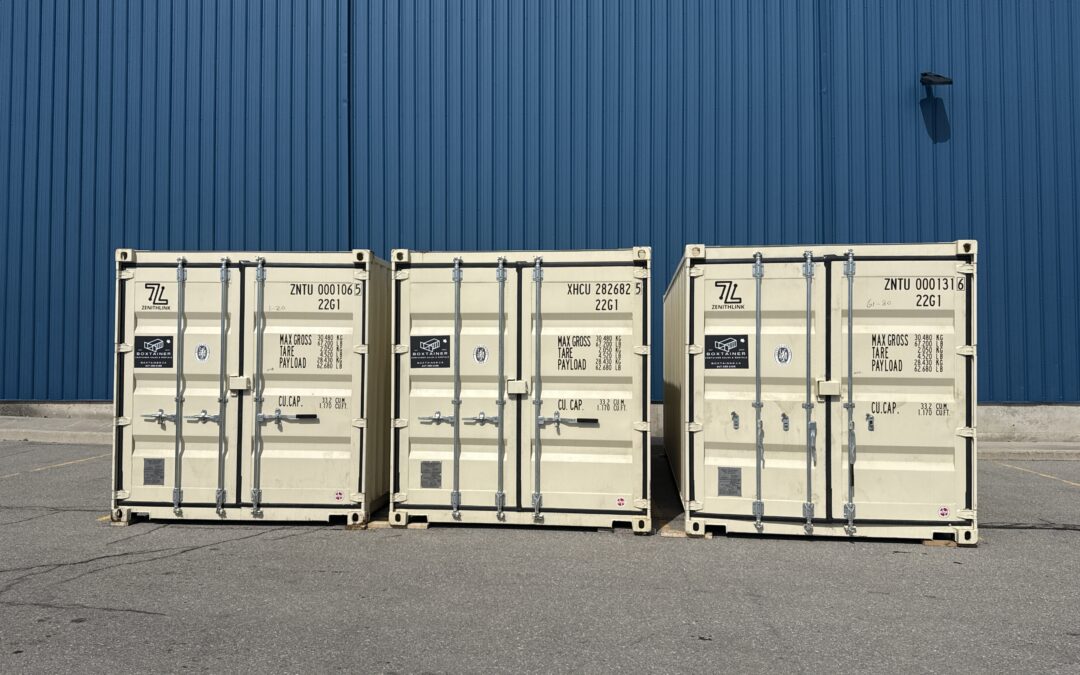
Pallet counts drive most sizing decisions
Square footage is often where businesses start, but pallet math tends to be more useful, really. In a single row, 9 to 11 standard pallets are generally fit into a 20-foot container, depending on pallet dimensions and spacing. A 40-foot unit roughly doubles that. For Ontario businesses storing seasonal inventory or overflow stock, this difference is often what decides between renting one container versus two. It’s a simple calculation; it’s skipped more often than it should be, though.
Height matters more than people assume
Standard containers run about 8’6″ tall inside. That’s pushed closer to 9’6″ by a 40′ High Cube. The extra foot sounds minor, but real capacity is added when crates, pallet racking, or taller equipment are being stacked. For this reason, 40′ High Cube units are often referenced by Boxtainer; they’re a common fit for customers storing anything taller than a standard pallet load. Oddly enough, the height difference tends to get overlooked until someone’s trying to fit a forklift-loaded pallet through a standard door.
Condition terms matter just as much as size
Only New One Trip and Used Cargo Worthy (CW) containers are sold by Boxtainer. Cargo Worthy means the unit is structurally sound and suitable for cargo use, though some cosmetic wear should be expected: dents, surface rust, minor scratches, the occasional repair patch. These are normal signs of a container that’s been in service, not red flags. Because inventory depends on depot availability, a specific unit usually can’t be hand-selected before delivery. What’s guaranteed is the condition standard, not the individual container’s appearance.
Site prep affects which size actually works
Before a size is decided on, the delivery site needs a look, to be fair. Roughly 70 to 80 feet of straight clearance is needed for a 20′ container delivery, while a 40′ Landoll delivery typically needs 120 to 130 feet, plus turning room at the entrance. Placement should be on a firm, level surface; asphalt, concrete, or compacted crushed stone all work well. This step is probably skipped more often than it should be, and it’s likely the most common reason deliveries get delayed or rescheduled.
Ventilation and elevation solve different problems
These two get mixed up often, in a way. Internal moisture control inside the container itself is addressed by ventilation. Elevation, using blocking or support, is about levelling the unit, managing drainage underneath, and keeping doors aligned properly. A container can have good airflow and still sit poorly on uneven ground, so both need attention separately, rather than one being assumed to solve the other. Probably enough on that one.
Renting makes sense for a lot of Ontario use cases
For construction projects, renovations, or seasonal inventory swings, renting is often the more practical route than buying outright. Rentals are billed once per calendar month by Boxtainer, 12 cycles a year, not every 28 days. Delivery and pickup are charged as separate fees. Pricing varies by size, duration, and site logistics; Ontario market averages give a general sense of cost, though actual quotes depend on the specifics of each job. Anyway, that’s usually where things click, for most customers comparing size and cost side by side.
Niagara-based operations give Ontario customers an edge
Boxtainer is run out of a Niagara Falls headquarters with a local yard, which supports faster turnaround for businesses across the region. This isn’t a limitation on inventory or logistics; it’s a strength, built around knowing the area and its delivery routes well. From Niagara storage needs to broader Ontario projects, that proximity tends to pay off when timelines are tight.
Getting the right size starts with a conversation
The choice between a 20-footer, a standard 40′, or a 40′ High Cube comes down to what’s being stored, how it’s loaded, and what the delivery site allows. Pallet counts, equipment dimensions, and site clearance are walked through by Boxtainer’s team before a size is recommended, whether for shipping containers for sale or shipping containers for rent. Visit Website to explore current container options and get a sizing conversation started with Boxtainer’s team.
FAQ
What size container is best for storing pallets? For standard pallet storage, a 40-foot container generally offers the best balance of space and cost per pallet. A 20-foot unit works for smaller operations or tighter yard space, though fewer pallets are held overall. Businesses expecting to scale their inventory often start with the 40-footer to avoid needing a second unit later.
Is a High Cube container necessary for equipment storage? Not always, but it helps. Equipment with vertical clearance needs, like upright machinery or stacked crates, benefits from the extra height a 40′ High Cube provides. Standard height containers are often sufficient for flatter, wider equipment instead.
Can I store oversized inventory in a shipping container? Oversized inventory can usually be accommodated, provided it fits through the door opening and within the internal dimensions. This is worth confirming before delivery, since door width and container length both play a role. These specifics are typically walked through with customers by Boxtainer’s team before an order is finalized.
Does Boxtainer let customers pick the exact container before delivery? Not typically. Container assignment depends on depot and inventory location at the time of order, so a specific unit can’t be hand-selected or guaranteed. Condition standards, New One Trip or Cargo Worthy, can be expected to be met regardless of which specific unit ships.