Measuring the Site Before You Measure the Container
Confirming site access first is often skipped when a container gets ordered, and that’s a common misstep. A straight clearance of roughly 70 to 80 feet is usually needed for a 20′ delivery; 120 to 130 feet is required for a 40′ Landoll setup. This space has to run in a straight line, since tight corners can’t be maneuvered around by large trucks the way smaller vehicles manage it. Entrance width and turning room matter too, especially on commercial lots with limited laneway access. Across Ontario, this step gets skipped more than it probably should, particularly on older industrial sites or compact urban lots.
What “Tight” Actually Means on a Delivery Day
A site that looks fine on paper can turn out tighter in person. Overhead wires, parked vehicles, and narrow gates between buildings are frequently missed during a quick walkthrough. One Niagara business, for example, had the right square footage, but a laneway too narrow for the Landoll trailer; the delivery had to be rescheduled with a smaller truck configuration. That sounds fine on paper, but it rarely plays out that cleanly on site. Adjustments like this are usually avoidable with a short conversation ahead of time, often just photos or a quick visit.
Ground Surface Comes Before Container Choice
Surface prep is often treated as an afterthought, but it shouldn’t be, to be fair. A firm, level base is needed, and asphalt, concrete, or compacted crushed stone all work well. Settling issues tend to be caused by soft gravel or unlevelled grass over time, which can throw off door alignment and create drainage problems around the base. This is a separate consideration from internal ventilation, which deals with moisture inside the unit rather than how it sits outside.
Understanding What “Cargo Worthy” Actually Covers
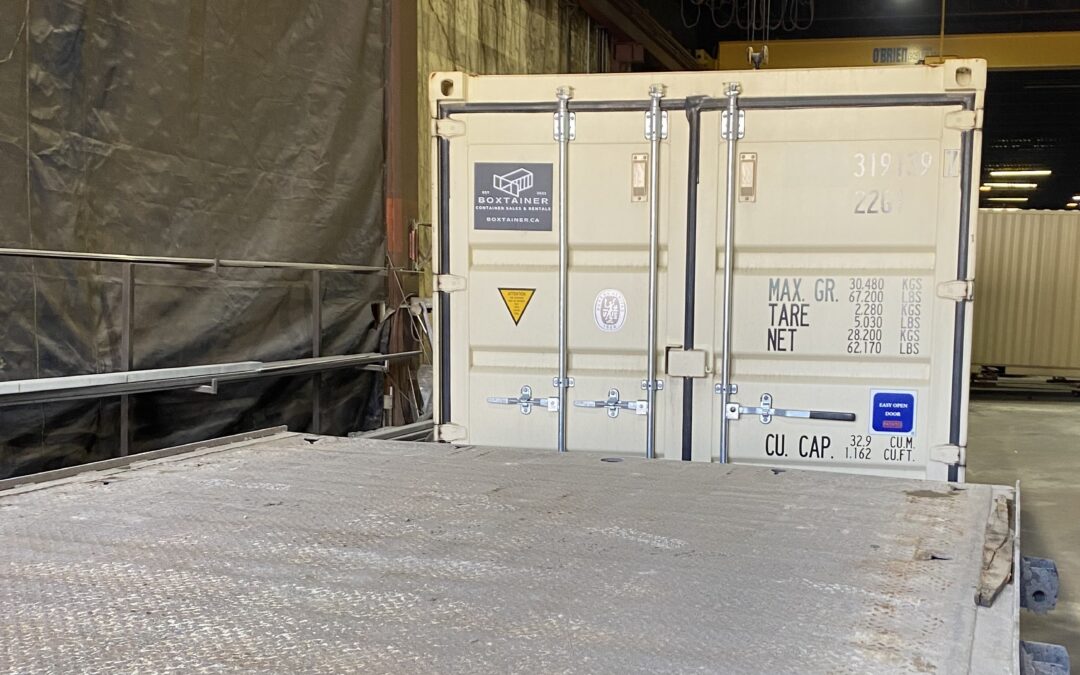
Boxtainer’s inventory is limited to New One Trip and Used Cargo Worthy (CW) containers, often in 40′ High Cube configurations depending on availability. Structurally sound and fit for cargo use, that’s what Cargo Worthy means; it isn’t the same as cosmetically perfect. Dents, surface rust, scratches, and visible repairs are considered normal on CW units. Confusion on delivery day tends to be prevented when this expectation gets set early, especially for buyers comparing used units against new ones.
Why You Can’t Always Pick the Exact Unit
Walking a depot yard to pick a specific container would be convenient, but that’s generally not how delivery logistics work. Which unit gets dispatched depends on depot location and current stock levels at the time of order. This isn’t a limitation unique to Boxtainer; it’s standard across the container industry. Buyers are better served by confirming condition category, New One Trip, CW, WWT, or AS IS, rather than expecting to inspect a specific box beforehand. Probably enough said on that point.
Rental Billing Works Differently Than Most Assume
Rentals are billed once per calendar month, which comes out to 12 billing cycles a year rather than 13. Delivery and pickup are charged as separate line items; they’re not folded into the monthly rate. For construction projects, temporary business storage, renovations, or seasonal inventory needs, renting is often the more practical route. The right choice, sometimes, really depends on project length, container size, and how far the unit needs to travel. Ontario pricing varies site to site, so broad ranges should be treated as general market indicators rather than fixed quotes.
Why Niagara Matters More Than People Expect
Boxtainer’s headquarters and local yard sit in Niagara Falls, which puts the business close to a wide stretch of Ontario’s commercial and industrial corridor. Scheduling flexibility and faster turnaround on both sales and rentals tend to be supported by that local presence. It’s not a limitation on inventory access; it’s actually a point of strength for coordinating deliveries across the region. Over time, that’s usually where the planning conversation starts to click into place. Interesting how that works, honestly.
Confirming the Details Before You Order
Getting a container delivered to a tight commercial site comes down to a short list: clearance space, surface prep, condition expectations, and billing structure. None of these are complicated on their own, but skipping even one tends to cause delays. These specifics are worked through by Boxtainer with Ontario businesses before scheduling, which helps avoid surprises on delivery day. For anyone planning a container purchase or rental, site details are worth reviewing directly with the team. Visit Website to get started.
FAQ
What clearance does a delivery truck actually need? A straight-line clearance of about 70 to 80 feet is typically required for a 20′ container drop, and closer to 120 to 130 feet is needed, in a way, for a 40′ unit delivered by Landoll. This space needs to be clear and straight, not just available somewhere on the property. Tight urban lots or narrow laneways often require a site visit or photos beforehand, so the truck’s path can be confirmed in advance.
Does the ground surface really matter that much? Yes, it does. A firm, level surface is needed, such as asphalt, concrete, or compacted crushed stone. Uneven settling can be caused by soft or uneven ground over time, which affects door alignment and drainage. This is separate from internal ventilation, which deals with moisture control inside the box rather than how it sits on the ground.
Can I choose the exact container that gets delivered? Not typically. New One Trip and Used Cargo Worthy containers are sold by Boxtainer, and Cargo Worthy means the unit is structurally sound and suitable for cargo use, with some normal cosmetic wear such as surface rust, dents, or minor repairs. Which specific unit arrives often depends on depot location and current inventory; hand-selecting an exact container before delivery usually isn’t possible.
Is renting a better option for a short-term project? It depends on the project. Rentals are billed once per calendar month rather than every 28 days, and delivery and pickup are charged as separate fees. For construction sites, renovations, or seasonal inventory storage, renting tends to make more sense than buying outright, though the right fit really comes down to duration and how often the unit will move.