
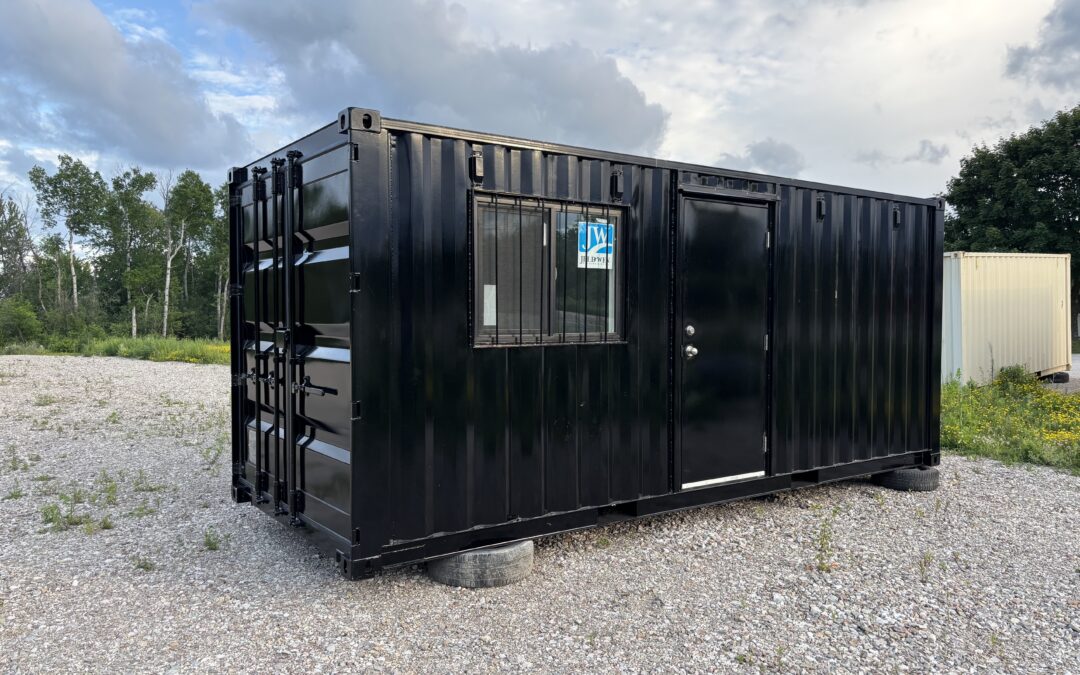
Why Elevation Matters More Than It Looks
A container sitting directly on dirt or uneven ground will shift, almost always. Soil gets compressed unevenly under thousands of pounds of steel, and that shift shows up first at the doors. Hinges bind. Gaps appear at the seals. For an Ontario business running a container as job site storage, this isn’t a cosmetic issue, it’s an access issue. This is solved by blocking, which distributes weight evenly across load-bearing points, usually the four corner castings. It sounds minor until a crew can’t open the doors on a Monday morning.
What Proper Blocking Actually Involves
Blocking typically means that solid supports, concrete blocks, steel beams, or similar load-rated material, are placed under the container’s corner castings. The surface beneath needs to be firm and level: asphalt, concrete, or compacted crushed stone all work well. Soft or sloped ground is where most problems start. A Niagara contractor once had a container set directly on loose fill before a winter freeze; by spring, one corner had settled nearly two inches. Reblocking fixed it, though a proper site survey beforehand would have avoided the whole thing, probably.
Drainage: The Quiet Half of the Equation
Water pooling under a container is rarely noticed until rust has already formed along the base rails. A gap is created by elevation that lets water move instead of collecting. This matters more in Ontario, where freeze-thaw cycles are common and standing water becomes ice, which then shifts the ground further. Most of this is handled by grading the site so water runs away from the container, combined with proper blocking height. That sounds good on paper, but it only works if it’s done early, before the ground has a chance to settle wrong.
Door Alignment Problems Are Usually Preventable
Doors are usually the first thing to show a levelling problem. Even a slight tilt, sometimes just an inch over the container’s length, can cause the locking bars to bind or the seals to gap. This is frustrating for a business relying on frequent access, like a seasonal retailer storing inventory. Reblocking after the fact is possible, but it’s disruptive, often requiring the unit to be lifted again. Most of this is avoided simply by getting the blocking right at delivery.
Delivery Access Matters Before Blocking Even Starts
None of this works if the delivery truck can’t get the container into position. Around 70 to 80 ft of straight clearance is generally needed for a 20′ container delivery; closer to 120 to 130 ft, plus room to maneuver at the entrance, is needed for a 40′ Landoll delivery. Coordination across Ontario is supported by Boxtainer’s Niagara Falls yard, though site access still needs to be confirmed ahead of time. Skipping this step is one of the more common delays we see, even now.
Rental Customers Face the Same Setup Requirements
Whether a container is purchased or rented, the site prep expectations don’t change. Rental is actively recommended by Boxtainer for construction projects, renovations, temporary business storage, and seasonal inventory needs, and blocking still applies the same way. Rental billing runs once per calendar month, not every 28 days; delivery and pickup are charged as separate fees. That’s usually where it clicks for customers weighing rental against purchase, since the setup work is identical either way, in a way.
Boxtainer’s Inventory and What That Means for You
New One Trip and Used Cargo Worthy (CW) containers are sold by Boxtainer, including 40′ High Cube units where applicable. Cargo Worthy means the unit is structurally sound and suitable for cargo use, though normal cosmetic wear, dents, surface rust, minor scratches, should be expected. Exact unit selection depends on depot and inventory location, so a specific container generally can’t be hand-picked before delivery. Pricing varies across the Ontario market depending on size, condition, and transport distance; a specific quote can be provided by Boxtainer based on your project.
Getting the Setup Right From the Start
Elevating a container properly isn’t complicated, but some planning is required: site surface, drainage direction, delivery clearance, and the right blocking material. These conversations are handled regularly by Boxtainer’s team, working with Ontario businesses setting up storage for construction, renovation, or seasonal needs. Probably enough to say: if you’re planning a container delivery and want to get the site prep right the first time, Visit Website to connect with Boxtainer’s team.
FAQ
Q: Why does a shipping container need to be elevated at all?
Moisture gets trapped against the container’s base through ground contact over time, and rust is accelerated as a result. Airflow underneath is maintained when the unit is elevated on blocks, which reduces direct water exposure. The floor structure is also made easier to inspect later, which matters, in a way, for long-term storage setups.
Q: What happens if a container isn’t level?
Doors can bind, sag, or stop sealing properly, sometimes within a single season. The frame itself can be twisted slightly by uneven weight distribution. Correcting this after the fact tends to be more disruptive than preparing the site properly before delivery; so it’s worth getting right the first time.
Q: Can I use any material to block a container?
Not really. Dense, load-rated materials, such as concrete blocks, railway ties, or steel beams, are standard; loose gravel or wood pallets won’t hold consistent support long-term. Since the full weight of the unit is borne by the corner castings, the blocking material needs to handle that load without shifting.
Q: Is blocking the same as ventilation setup?
No, these are two separate things. Physical support, levelling, and drainage underneath the unit are handled through blocking. Airflow and condensation inside the container itself are addressed by ventilation. These are treated as distinct steps, sometimes explained separately, by Boxtainer during setup consultations.