Start With What You Actually Have, Not What You Think You Have
The first step in estimating container space is taking a real inventory. Not a mental one. Things should be written down, or better yet, photographed. Many people in Ontario who rent containers for the first time go off memory, and memory tends to undercount the awkward stuff: the garden equipment, the seasonal furniture, the boxes that have been sitting in a corner for two years.
Items can be grouped into categories: furniture, boxes, equipment, and anything oversized. For each group, the rough dimensions of the largest pieces should be estimated. That gives you a working volume to compare against container specs, and it gets you much closer than guessing would. It’s not a perfect science; even so, it’s a solid starting point.
Understand What Container Sizes Actually Mean in Practice
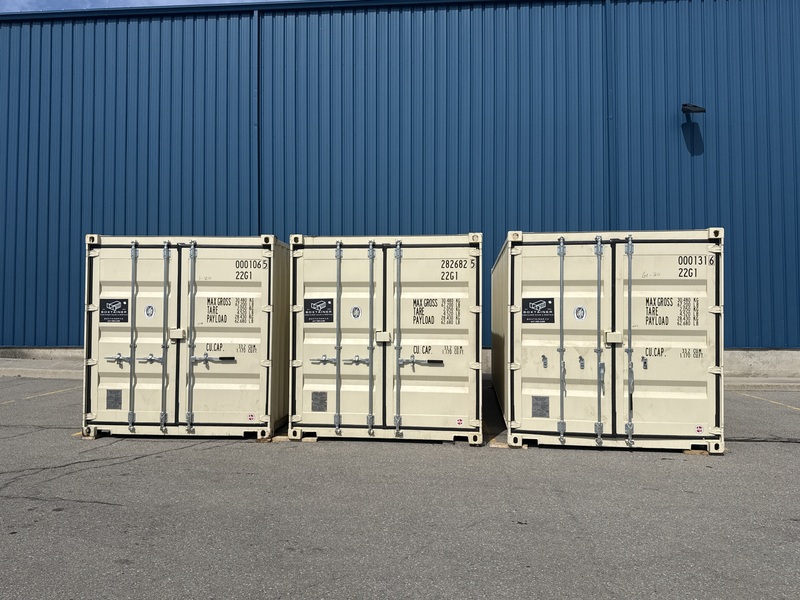
Standard shipping containers come in a few common sizes: 10-foot, 20-foot, and 40-foot. Those numbers refer to length. Width and height are fairly consistent across units, usually around 8 feet wide and 8.5 feet tall, though high-cube containers offer a bit more vertical clearance.
So a 20-foot container gives you roughly 160 square feet of floor space. That sounds like a lot until stacking begins. In practice, usable space depends heavily on how well items are packed and whether anything needs to be accessed mid-rental. Containers for rent are often used for both storage and active retrieval, and those two uses require different packing strategies, something that’s easy to overlook at the start. Interesting how that works, really.
The 20% Buffer Rule and Why It Matters
One thing that tends to get overlooked is packing efficiency. Even experienced movers rarely fill a container to 100% of its theoretical volume. Odd-shaped items, fragile pieces that can’t be stacked, and the need to leave a walking path all eat into usable space, bit by bit.
A practical approach is to calculate your estimated volume, then add 20% on top before a size is selected. If your items total roughly 800 cubic feet, a container with at least 960 cubic feet of capacity is probably what you want. That buffer accounts for real-world packing, not ideal packing. That sounds reasonable on paper, but from what we’ve seen, renters who skip this step are the ones who call back asking about a larger unit.
Think About Access, Not Just Storage
Storage and access are, in a way, two different problems. If a container is being rented to hold items that won’t be touched for six months, it can be packed tightly and efficiently. But if tools, inventory, or seasonal stock need to be retrieved on a regular basis, room to move around inside will be needed.
A contractor in the Niagara region, for example, might store equipment in a container between project phases. If that equipment needs to come out and go back in every few weeks, the effective usable space drops considerably. Your actual workflow should be planned for, not just the volume of what you own; that distinction changes which size makes sense.
Vertical Space Is Often Wasted
Most people think in terms of floor space. Containers offer meaningful vertical clearance, though, typically 7.5 to 8.5 feet of interior height. Items that can be safely stacked should be stacked. Shelving units, pallet racking, or even simple plywood platforms can dramatically increase how much fits in a given unit.
Businesses using containers for sale or rent as semi-permanent storage solutions in Ontario often have basic shelving installed to double their effective capacity without moving to a larger unit. It’s a practical option worth considering before automatically sizing up. A bit of planning on the front end usually pays off, and over time, that choice tends to reduce costs as well. Probably more often than people expect.
When a Smaller Unit Actually Makes More Sense
Bigger isn’t always better. A 40-foot container rented at a higher monthly rate doesn’t help if half of it sits empty. In many cases, two smaller units, or one well-chosen mid-size unit, serve the purpose more efficiently and at lower cost.
For residential customers or small businesses with fluctuating inventory, containers for rent offer the flexibility to adjust between rental periods. That’s worth factoring into your estimate. If storage needs are likely to change over the next six to twelve months, starting with a smaller unit and reassessing later may be the smarter path. That’s usually where it clicks for people who’ve rented before.
A Quick Sizing Checklist Before You Commit
Before a rental is finalized, a few basic questions should be worked through. Has the approximate volume of your items been calculated? Has a 20% buffer been added? Has access frequency been considered? Does your delivery location accommodate the container size you’re looking at?
That last point matters more than people expect. Site access in Ontario, especially on residential properties or tight commercial lots, can limit which container sizes are practical to deliver. BOXTAINER handles delivery logistics across Ontario, though it’s worth confirming your site dimensions before committing to a size. A quick conversation upfront avoids complications later.
Ready to Find the Right Container Size?
Getting the estimate right before you rent saves money, reduces stress, and means a packed container won’t need to be reorganized two weeks in. Whether containers for sale or containers for rent are being considered across Ontario, the sizing process stays the same: inventory your items, calculate volume, add a buffer, and match to available units.
BOXTAINER works with Ontario businesses and individuals to find container solutions that fit the actual need, not just the nearest standard size. If you’re not sure where to start, or want to talk through your specific situation, visit the website to explore available sizes and get in touch with the team.
FAQ
Q: How do I figure out how much stuff I actually have? Every category of item you plan to store should be listed first, then dimensions for the larger pieces can be estimated from there. Smaller items can be grouped by box count. A rough volume calculation, length times width times height for each major item, gives you a working number to compare against container specs. Not exact, but close enough to make a reasonable decision.
Q – Does the shape of my items affect which container size I need? Fair point. It does, more than people expect. Awkward shapes, like ladders, lumber, or machinery with irregular frames, tend to waste vertical and corner space that a volume estimate alone won’t capture. A rough floor plan of how items would actually be arranged is worth sketching out before committing. That still surprises people.
Q: What’s the difference between renting and buying when it comes to sizing? When containers are rented, size adjustments can be made between rental periods if needs change. Buying locks you into a fixed unit, so getting the estimate right matters more upfront. Both options are available through BOXTAINER for Ontario customers, depending on whether the need is short-term or ongoing.
Q – Is there a standard rule of thumb for container sizing? Roughly, yes. A 10-foot container suits a single-room cleanout or small equipment cache. A 20-foot unit handles most small business or renovation storage needs. A 40-foot container is typically used for larger commercial inventory, construction sites, or multi-room residential storage. These are general guides, not guarantees. Every situation is a bit different.