
HST Applies the Same Way It Does to Most Goods
Shipping containers aren’t treated as a special category under Ontario’s tax rules. They’re goods, and in Ontario, goods are generally subject to 13% HST. This applies whether a 40′ High Cube is being bought for a backyard build or a smaller unit is picked up for business storage. A client in Niagara once assumed storage equipment might fall under some kind of exemption; it doesn’t, at least not under current provincial guidance. The rate is applied the same way it would be on a piece of equipment or a load of building material. No separate “container exemption” has been written into the tax code, as far as current rules show.
Purchases Are Taxed on the Full Sale Price
When a container is purchased outright, HST gets calculated on the total sale price. That includes New One Trip units and Used Cargo Worthy inventory alike. Ontario market pricing for containers varies quite a bit; it often ranges from a few thousand dollars for smaller used units to considerably more for larger or newer stock. These figures should be treated as general market averages, not fixed quotes, since pricing depends on size, condition, and availability at the time. The container’s structural condition matters for resale value, but how HST gets applied at checkout isn’t changed by it, not really.
Rentals Are Billed Monthly, Not Every 28 Days
Rental billing in Ontario typically runs on a calendar month cycle, 12 payments a year rather than 13. HST is included in each of those monthly charges. That distinction matters more than people expect, since an extra billing period gets added annually under a 28-day cycle, which can shift budgeting for longer projects. Delivery and pickup are usually billed as separate line items, and those fees are taxed too. That’s usually where it clicks, after a while, for renters comparing quotes across providers.
Delivery and Site Prep Costs Are Taxed Separately
Delivery fees aren’t bundled into the container’s purchase or rental price; instead, they’re billed on their own, and HST is applied to that charge as well. Straight clearance requirements matter here too, quite a bit, actually. For a 20′ container, about 70 to 80 feet of clearance is generally needed for delivery, while a 40′ unit delivered by Landoll trailer needs closer to 120 to 130 feet, plus enough room for turning. None of this changes the tax owed, though total project cost is affected by it. Site prep, placing the container on a firm, level surface like asphalt, concrete, or compacted crushed stone, is a separate consideration from tax, one that’s often overlooked until delivery day.
Cargo Worthy Containers and What “Condition” Actually Means
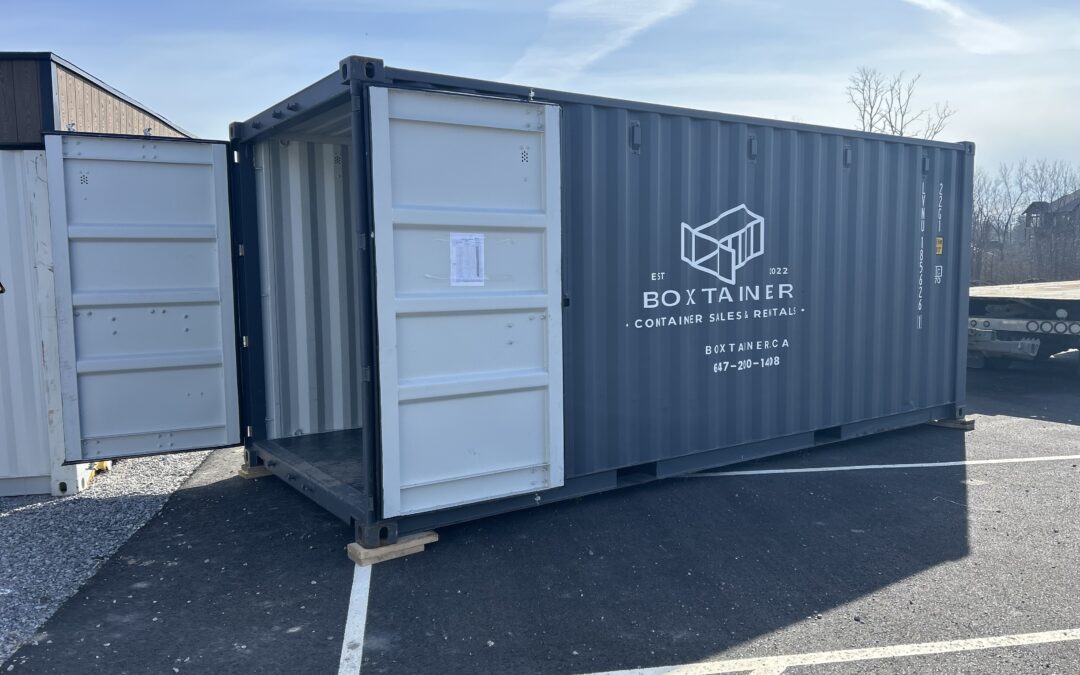
Only New One Trip and Used Cargo Worthy containers are sold by Boxtainer, and it’s worth being clear about what Cargo Worthy means. It refers to a unit that’s structurally sound and suitable for cargo use, not one that’s cosmetically perfect. Dents, surface rust, scratches, and prior repairs are normal and should be expected on CW stock. None of that changes the HST calculation, since tax is based on price, not condition grading. Exact units can’t always be hand-selected before delivery either; that depends on depot and inventory location at the time of order.
Why Niagara Businesses Often Choose to Rent First
For many Ontario businesses, particularly those in construction, renovation, or seasonal retail, renting makes more sense than buying outright. That kind of flexible access is supported by Boxtainer’s Niagara Falls headquarters and local yard, with containers available for short-term storage, job site use, or seasonal inventory overflow. Rather than being a limiting factor, the Niagara base has become one of the company’s strongest advantages, since fast turnaround times are kept for local clients. Whether renting or buying makes more financial sense depends heavily on project length and usage, not on a fixed formula. Hard to say in advance, sometimes.
Status Card HST Exemptions
Eligible individuals may qualify for an HST exemption upon presenting a valid Status Card or Certificate of Indian Status. This exemption may also apply to eligible organizations, subject to applicable Canada Revenue Agency (CRA) requirements.
Getting Clarity Before You Commit
HST isn’t optional, and it’s applied consistently across Boxtainer’s container sales and rentals in Ontario. What varies is pricing, delivery logistics, and whether some of that tax can be recovered by a business through input credits. Total costs are explained by Boxtainer’s team before anything is finalized, since surprises at invoice time are rarely welcome. Probably enough said on that front. For current container availability, pricing details, and rental terms, visit the website to see what’s in stock.
FAQ
Q: Is HST charged on used shipping containers in Ontario?
Yes. HST is applied regardless of whether a container is New One Trip or Used Cargo Worthy. The condition of the unit does not change the tax treatment; only the sale price and applicable rate matter.
Q: Do I pay HST on a container rental every month?
In most cases, yes. Rentals are billed on a monthly cycle, and HST is applied to each invoice. Delivery and pickup charges, since they’re billed separately, are also taxed on their own.
Q: Can a business claim back the HST paid on a container?
Input tax credits may be claimed by businesses registered for HST if the container is used for commercial purposes. This depends on how the business is structured and what the container is used for, so it’s worth checking with an accountant, in a way, before assuming eligibility.
Q: Does HST apply differently for construction or temporary storage use?
Not really. The tax rate itself doesn’t shift based on intended use. What changes more often is whether a business can recover the HST through credits, something that depends on registration status rather than the container’s purpose.