
Why Rural Delivery Is Different From a City Drop-Off
A container delivery to a downtown lot and one to a rural Ontario property aren’t really treated the same way. Traffic and permits dominate city deliveries; the land itself dominates rural ones. Laneways curve where city streets don’t. Trees tend to grow closer to the edge of a driveway than anyone notices, at least until a trailer tries to pass through. In most cases, the biggest risk isn’t the distance from the highway; it’s the last 200 feet of the property. That stretch, in a way, is checked carefully before a delivery date gets confirmed.
The Clearance Numbers, and Why They’re Not Just Paperwork
Roughly 70 to 80 feet of straight clearance is generally needed for a 20′ container delivery. A 40′ container, delivered by Landoll trailer, needs closer to 120 to 130 feet, plus enough room at the entrance for the truck to turn in without clipping a fence post or backing into a ditch. These figures aren’t arbitrary. They’re drawn from how the trailers physically maneuver and offload. A property near Niagara with a long, straight farm lane usually clears this without issue, while a tighter rural lot with a sharp bend often needs a second look, before booking.
Roads, Gravel, and the Seasonal Factor
A loaded delivery truck can usually be handled by gravel and dirt roads, as long as the surface is firm and compacted. Problems tend to show up after heavy rain or during spring thaw, when softer ground can bog down a trailer that would otherwise pass through fine. Ontario’s weather swings make this worth checking in advance, particularly for properties further from major routes. A quick phone conversation about current road conditions often saves a wasted trip; that’s a headache nobody wants on either end, to be fair.
Site Prep Before the Truck Even Arrives
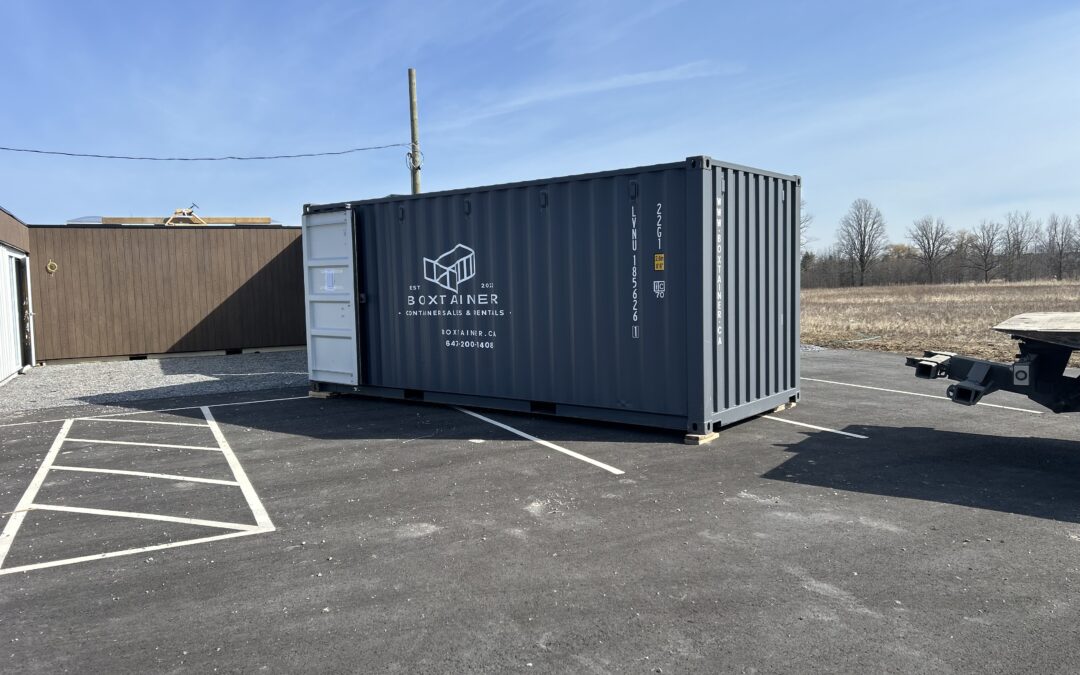
The container needs to be placed on firm, level ground, whether that’s asphalt, concrete, or compacted crushed stone. This is separate from ventilation and moisture control inside the unit itself; placement is really about drainage, door alignment, and keeping the structure level over time. That leveling process is assisted by container blocking. Skipping this step is one of the more common reasons a delivery gets delayed on-site, and it’s avoidable, really, with a short conversation beforehand.
What “Cargo Worthy” Actually Means for Rural Buyers
New One Trip and Used Cargo Worthy containers are what Boxtainer sells, including 40′ High Cube units where that size fits the job. Cargo Worthy means the unit is structurally sound and fit for cargo use, though normal wear, like surface rust, dents, or prior repairs, may still show. It’s not a grading scale; it’s a functional standard. For a rural property owner storing equipment or seasonal inventory, the distinction between cosmetic wear and structural soundness usually matters more than appearance, bit by bit becoming clearer, once the unit actually arrives.
Rentals, Pricing, and What Gets Billed Separately
Ontario pricing for containers varies by size, condition, and distance, so any range quoted should be read as a general market average rather than a fixed number. Rentals are billed once per calendar month, 12 cycles a year, not every 28 days. Delivery and pickup are charged as separate fees, apart from the monthly rental rate itself. For construction sites, renovation projects, or seasonal storage needs, renting tends to make more sense than buying outright, though the right call really does depend on how long the container’s needed, and where it’s going.
Why the Niagara Base Matters for Rural Access
A practical starting point for deliveries across Ontario is given by the Niagara Falls headquarters and local yard, not a limitation. Access issues tend to be anticipated by drivers familiar with the region’s rural roads, often before they turn into delivery-day problems. That local knowledge, paired with a straightforward check of site access ahead of time, usually keeps things moving on schedule. Over time, that’s generally where the planning conversation starts to matter more than the container itself. Probably enough said there.
Getting Started
Rural delivery isn’t complicated, but it does take a bit of upfront planning around clearance, road condition, and site prep. Those details are worked through with every customer by Boxtainer before a delivery date is locked in. Visit the Boxtainer website to check container options and start planning a delivery suited to your property.
FAQ
Q: What clearance does a shipping container delivery actually need?
About 70 to 80 feet of straight, unobstructed clearance is generally needed for a 20′ container, so the delivery truck can approach and offload without trouble. More room is required for a 40′ container delivered by Landoll trailer, usually in the 120 to 130 foot range, since the trailer itself is longer, and the offloading method needs extra space. Beyond straight clearance, enough room has to exist at the entrance for the truck to turn without backing into trees, fences, or ditches. Rural properties with long but narrow laneways sometimes fail this test, even when the driveway length looks generous on paper.
Q: Can gravel or dirt roads handle a container delivery?
In most cases, yes, provided the road is firm and well compacted. Real problems can be caused by soft or muddy ground, especially after rain or during spring thaw. Confirming road conditions ahead of the delivery date is generally recommended by Boxtainer, particularly for seasonal properties or longer rural laneways.
Q: Does Boxtainer guarantee I can pick my exact container before delivery?
No. Container availability depends on depot and inventory location, so hand-selecting or physically inspecting the exact unit before delivery isn’t something that can be promised. What is guaranteed is the condition category, whether that’s New One Trip, Used Cargo Worthy, Wind and Watertight, or AS IS; each is defined clearly before the order is placed.
Q: What counts as Cargo Worthy condition?
Cargo Worthy means the container is structurally sound and suitable for cargo use, though normal cosmetic wear, such as dents, surface rust, scratches, or prior repairs, may still be present. It’s a working-condition standard, not a cosmetic one. Only New One Trip and Used Cargo Worthy containers are sold by Boxtainer, including 40′ High Cube units where applicable.