
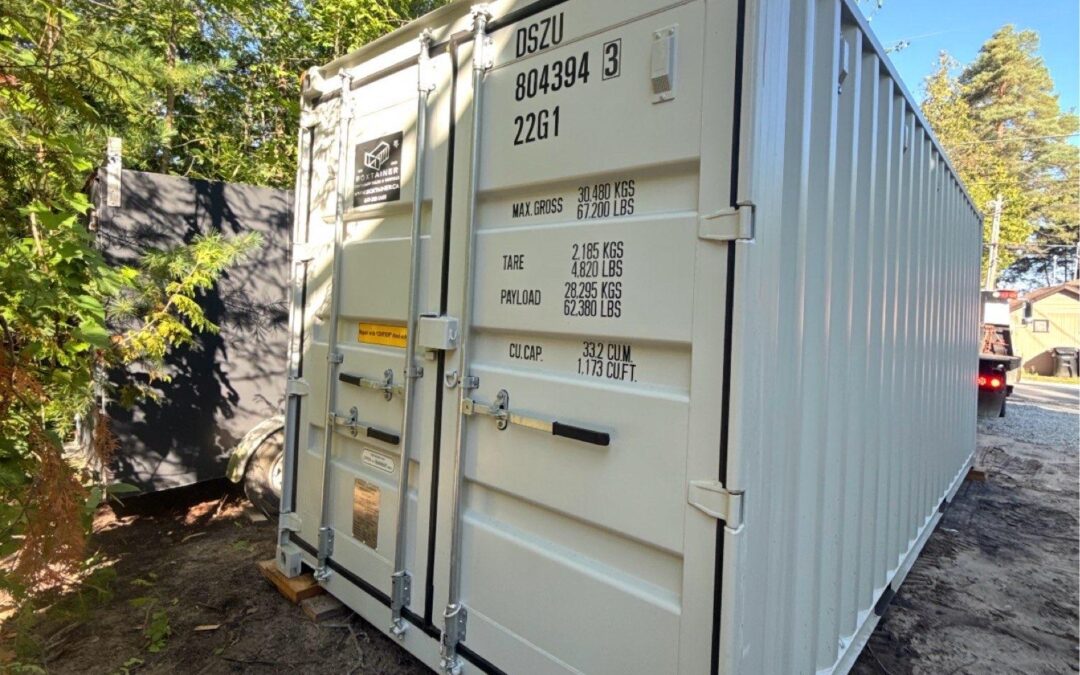
Starting With the Basics: What “New One Trip” Really Covers
Exactly one journey has been made by a New One Trip container, typically from the manufacturing plant overseas to its first port of entry. It hasn’t been used for storage, hasn’t sat through a renovation site; generally, only light marks from that single trip are shown. For Ontario buyers wanting the cleanest option available, this is usually the starting point. New One Trip stock is carried by Boxtainer specifically because it offers the most predictable condition, which matters when a container will double as secure storage for tools, inventory, or equipment through a Niagara winter.
Used Cargo Worthy: Sound Structure, Honest Wear
Used Cargo Worthy, often shortened to CW, means a container has been inspected and found structurally fit for carrying cargo. That’s the core of the designation. A flawless exterior isn’t promised, though. In most cases, dents along the panels, some surface rust, scratches from handling, and occasionally a patched section should be expected where a repair was made. None of that affects the container’s ability to function as secure storage. It’s a trade-off between cost and cosmetics, and for many Ontario businesses, that trade-off works out fine.
Where Wind & Watertight and AS IS Fit In
Wind & Watertight (WWT) and AS IS sit below Cargo Worthy on the condition scale, though neither tier is sold directly by Boxtainer. Sealed against weather, WWT units may still carry structural issues that haven’t been fully assessed. AS IS containers are sold exactly as found, with no condition guarantee at all. These terms show up often in broader industry listings, so knowing what they mean helps when comparing options, even if they’re not part of what Boxtainer offers.
The 40′ High Cube: A Few Extra Inches, A Lot More Room
Roughly a foot taller than a standard 40′ unit is a 40′ High Cube container, which doesn’t sound like much until shelving or stacked inventory gets involved. High Cube units have been used by contractors working renovation projects around the Niagara region for tool storage, where vertical space made a real difference. High Cube availability is referenced by Boxtainer where it applies, though exact stock depends on depot location and timing. It’s a detail worth asking about before finalizing an order; especially for commercial storage use.
No Hand-Picking, But Consistent Standards
One thing worth being upfront about: a customer can’t be guaranteed the chance to walk a yard and choose the exact container they’re buying. Inventory location and depot stock determine what ships out. What can be guaranteed is that a unit sold as New One Trip or Used CW will meet that standard’s definition, dents and all where applicable. Realistic expectations are kept this way, rather than promising something that depends on factors outside anyone’s control.
Delivery Logistics: Clearance, Site Prep, and What Gets Overlooked
About 70 to 80 ft of straight clearance is generally needed for delivery of a 20′ container; closer to 120 to 130 ft is needed for a 40′ Landoll delivery, plus room to turn at the entrance. Site prep is just as important. A firm, level surface is needed for the container, whether that’s asphalt, concrete, or compacted crushed stone. Door misalignment later can result from skipping this step, which is usually avoidable with a bit of planning. Probably enough said there. Ventilation inside the box is a separate concern from leveling and blocking; both deserve attention before delivery day.
Pricing and Rental Billing: What Ontario Customers Should Expect
Container pricing in Ontario varies by size, condition, and demand, so broad ranges should be read as market averages rather than fixed Boxtainer quotes. Rentals get billed once per calendar month, 12 cycles a year, not every 28 days, which keeps billing simpler and more predictable. Delivery and pickup are charged as separate fees from the monthly rental rate. For construction sites, seasonal inventory, or temporary business storage, renting often makes more sense than buying outright; though the right call depends on project length and budget specifics, I suppose.
Why Niagara Matters, and What Comes Next
Boxtainer’s headquarters and local yard sit in Niagara Falls, which puts the company close to a good portion of its Ontario customer base rather than relying on distant depots. Faster scheduling and more direct communication about what’s available are generally made possible by that proximity. Whether the need is a New One Trip container for long-term storage or a Used Cargo Worthy unit for a renovation project, understanding these terms upfront makes the ordering process smoother. Current inventory, pricing, and delivery details can be checked by visiting the Boxtainer website.
FAQ
Q: What does Cargo Worthy actually mean?
Cargo Worthy means the container has been inspected and found structurally sound and suitable for carrying cargo. Cosmetic perfection isn’t implied by the term, though. Dents, surface rust, scratches, and visible repairs are normal, normal enough, on a CW unit, and that expectation is set upfront by Boxtainer rather than left for buyers to assume.
Q: Can I pick the exact container I’m buying before it’s delivered?
Not usually. What’s available at the depot or yard at the time of order determines container selection, so hand-picking a specific unit isn’t something Boxtainer can guarantee. A container that meets the condition grade ordered is what’s promised, whether that’s New One Trip or Used CW.
Q: Why doesn’t Boxtainer sell Wind & Watertight or AS IS containers?
Boxtainer’s inventory is limited to New One Trip and Used Cargo Worthy, since those two tiers meet the reliability standard the company wants to stand behind. WWT and AS IS units do exist in the broader market, but more repair work is typically needed before they’re ready for storage or shipping use.
Q: How much clearance do I need for a 40′ container delivery?
Generally, 120 to 130 ft of straight clearance is required for a 40′ Landoll delivery, along with enough entrance and turning room for the truck to maneuver. Less is needed for a 20′ container delivery, around 70 to 80 ft. Site access is checked ahead of delivery day, in most cases.
Q: Does a container need special ventilation?
Internal ventilation and moisture control are separate from how the container sits on site. Condensation inside the box is handled by ventilation; leveling the unit, managing drainage, and keeping the doors aligned fall under elevation and blocking instead. Both matter, but they solve different problems.