Why Businesses Are Turning to Shipping Containers for Storage
The shift toward container-based storage isn’t hard to explain. Traditional warehouse space in Ontario has become harder to find and more expensive to lease, especially for smaller businesses that don’t need thousands of square feet on a permanent basis. That gap is filled, in a fairly practical way, by shipping containers. They arrive ready to use, sit on-site, and don’t require construction timelines. For a contractor storing tools between jobs, or a retailer managing seasonal overflow, that kind of immediate availability matters. The setup is simpler than most people expect; the cost is often more manageable than a long-term lease commitment.
The Core Benefits Worth Knowing
Security is probably the first thing businesses notice. Containers are built with heavy steel doors and lockboxes, which makes them harder to break into than most storage sheds or fabric structures. Weather resistance is another factor. Ontario gets a full range of conditions, from summer heat to deep winter freezes, and that range is handled by a steel container without much fuss. Ground-level access is also underrated. No loading dock is required, no elevator, no stairs. Items go in and come out at grade level, which saves time and reduces handling risk. For businesses moving heavy equipment or bulk inventory, that matters more than it might seem at first.
Buying vs. Renting: A Practical Breakdown
Both options serve distinct operational goals. Purchasing standard 20′, 40′, or 40′ High Cube containers makes sense when long-term or permanent storage is needed. While upfront capital is required, indicative Ontario market averages show a lower total cost over extended timeframes. Renting is ideal for temporary jobs, site renovations, and seasonal inventory surges. For example, a construction contractor or retailer needing temporary capacity can rent for specific project durations, paying monthly, with delivery and pickup billed as distinct charges.
What to Consider Before Delivery
Proper site setup is essential prior to delivery. Containers must sit on a firm, level surface—such as asphalt, concrete, or compacted crushed stone—to ensure doors align correctly and water drains properly. Delivery clearance is equally critical: 20′ containers require approximately 70–80 feet of straight clearance, while 40′ containers delivered via Landoll trailers require 120–130 feet, along with adequate entrance and turning space. Local municipal permits should also be verified prior to scheduling delivery.
Container Sizes and What They’re Used For
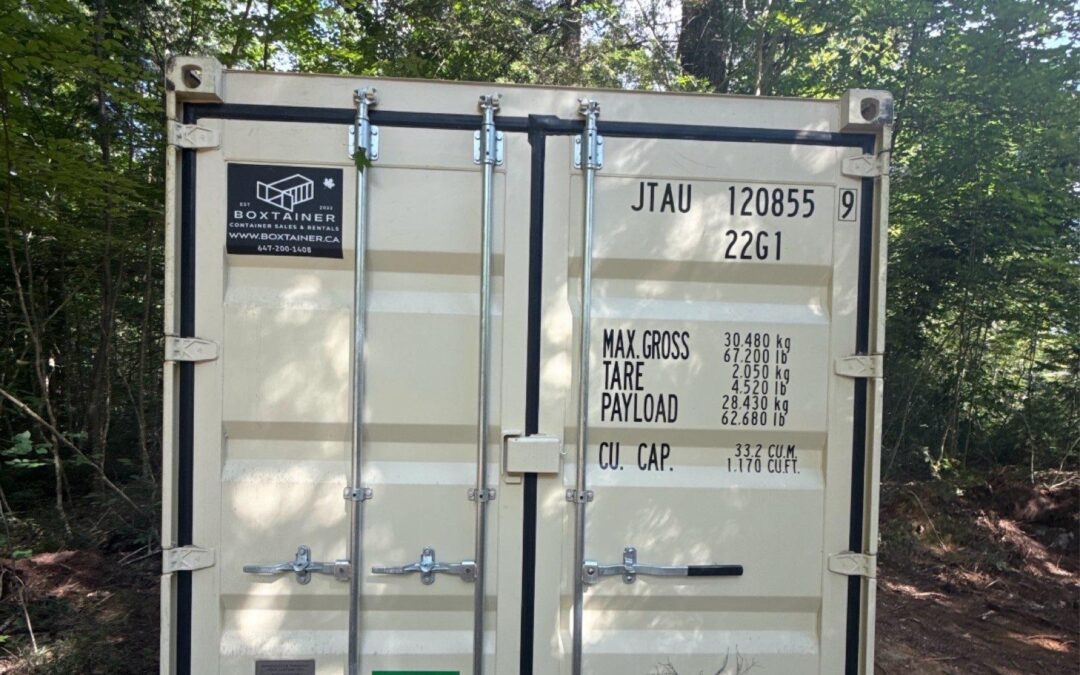
Boxtainer specializes in supplying New One-Trip and Used Cargo Worthy (CW) containers. Standard 20-foot units provide roughly 160 square feet of floor space, while 40-foot units double that capacity. For applications requiring vertical stacking or taller equipment storage, 40-foot High Cube containers offer an additional foot of interior height. Used Cargo Worthy units are fully wind and watertight and structurally sound for cargo, featuring normal cosmetic wear such as minor dents, surface rust, or panel patches.
Customization and Modifications
Standard storage containers can be modified with custom shelving, interior lighting, additional access doors, and electrical packages installed by licensed technicians. Passive or active ventilation systems can be added as a dedicated solution to manage humidity and airflow, separate from the ground-level blocking used for leveling and drainage. These targeted upgrades adapt standard equipment into dedicated operational spaces.
Niagara and Ontario-Specific Factors
With head office facilities and a dedicated local yard situated in the Niagara region, Boxtainer delivers strong regional support and prompt container supply across Southern Ontario. Seasonal agricultural cycles, commercial expansion, and local construction demand dedicated local inventory. Having localized logistics ensures fast dispatch, efficient site positioning, and streamlined support for both regional and province-wide operations.
Getting Started with BOXTAINER
Boxtainer supplies commercial and private clients across Ontario with New One-Trip and Used Cargo Worthy containers for sale, as well as flexible rental solutions. All equipment condition standards—including New One-Trip, Used Cargo Worthy (CW), Wind & Watertight (WWT), and AS IS—are clearly defined to ensure straightforward procurement. To view available inventory and current indicative market pricing, Visit Website.
FAQ
Q: Can a shipping container be used for long-term business storage in Ontario’s climate?
Yes, and it’s actually one of the most common applications. Corten steel holds up well through Ontario winters. Passive ventilation helps control interior condensation, while proper site leveling and blocking ensure smooth door operation and drainage. A well-maintained container can reliably provide 20 or more years of service.
Q: Do I need a permit to place a shipping container on my business property in Ontario?
It depends on your municipality and how long the container will stay. Short-term placements are sometimes treated differently than permanent installations. Worth checking with your local planning office before delivery. Not always a complicated process, but skipping that step can cause headaches later.
Q: What’s the difference between buying and renting a container for business storage?
Buying provides a permanent asset with a single upfront purchase, while renting offers flexibility for short-term or seasonal projects with monthly billing (12 cycles per year). Rentals require separate delivery and pickup fees. Purchasing New One-Trip or Used Cargo Worthy units generally suits ongoing, multi-year needs, whereas renting fits temporary timelines without long-term capital commitment.
Q: How much can fit inside a standard 40-foot shipping container?
Roughly the equivalent of a two-car garage, give or take depending on how items are stacked and organized. A 40-foot unit is often used for larger inventory volumes, equipment storage, or when a business is between facilities. Quite a bit of space, honestly.